Mixi’s mobile game Monster Strike was the top grossing app in 2017, according to mobile data and insights company Sensor Tower. The caveat, though, is that Google Play isn’t available in China — the stomping grounds of tech giant Tencent, which recently released its hit title Honor of Kings with the name Arena of Valor in the West. In outside gaming, Netflix’s app was the highest earner, dethroning Spotify, which sat at No. 1 in 2016.
The mobile market generated $58.6 billion last year, thanks mostly to games. The category accounted for $48.3 billion of spending, and many of the top titles maintained their dominance from earlier years. Games like King’s Candy Crush Saga and Supercell’s Clash of Clans debuted in 2012, but they still landed spots at No. 5 and No. 9 respectively in the top grossing chart.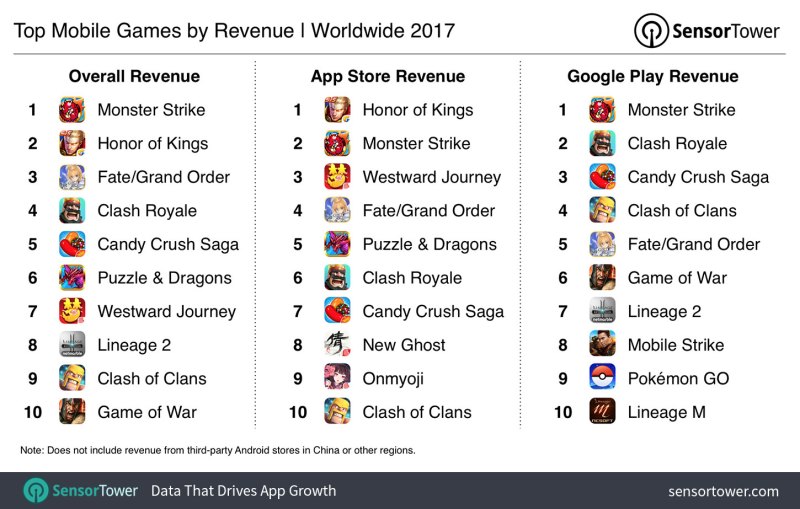
Niantic’s viral sensation Pokémon Go was missing from the top charts last year, but the company is still rolling out new content to keep its dedicated fanbase happy. The AR creature capturing game was the most downloaded mobile title in 2016, but Kiloo’s Subway Surfers earned the No. 1 spot as the most installed game in 2017.
Unsurprisingly, Tencent was the top grossing mobile publisher in the world last year. In second place was NetEase, another Chinese juggernaut which has jostled for the No. 1 spot in previous years.
“NetEase, Supercell, King, and Mixi rounded out the top five grossing publishers overall,” wrote Sensor Tower’s head of mobile insights Randy Nelson. “Meanwhile, the second to fifth spots in terms of non-game revenue were occupied by IAC (Tinder), Netflix, Naver (LINE), and Google, respectively.”
Tencent also racked up the most mobile game downloads overall, though Facebook had the most non-game and overall downloads.
Sunday, 18 February 2018
Sensor Tower: Mixi, Tencent, and Netflix were 2017"s top grossers in mobile

Saturday, 20 January 2018
Top 10 - The Best Bezel-Less Phones of 2018
We’ve all looked on in awe at Samsung’s almost bezel-less Galaxy series, and now Apple’s iPhone X wishing for a more affordable option. Well, you’re in luck, as this year we are seeing an influx of mobile manufacturers step-up and produce their own bezel-less smartphones.
Looking for awesome battery life? Smartphones with Amazing Battery Life 2018
In this roundup, we’ll take a look at some of the top bezel-less phones of 2018 that are either available now, set to be released soon or are still hot on the rumour mill. If you’ve heard of a great bezel-less phone that I’ve missed and that’s set for release this year, let me know in the comments below.
(Just want the best bezel-less smartphone with an awesome screen-to-body ratio that comes with the best cameras, is waterproof and you don’t care how much? Here ya go…)
Let’s get to it. Here’s our 2018 Top Bezel-less & borderless phones.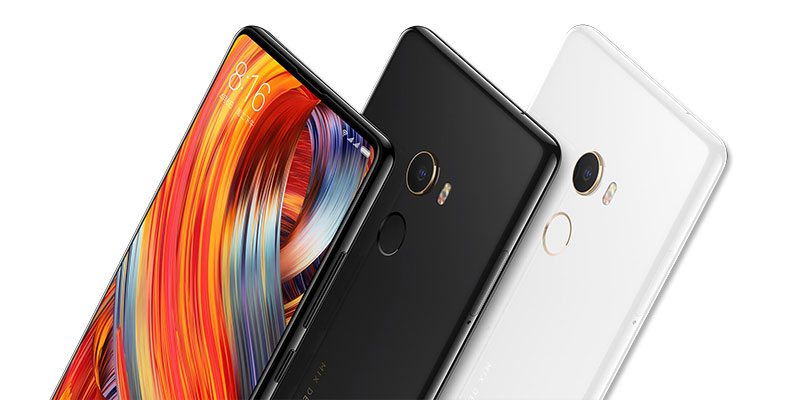
Xiaomi Mi Mix 2
The Award Winning Xiaomi Mi Mix 2 has arrived and while it’s not completely bezel-free like early rumours suggested, it’s still another impressive flagship level tri-bezel-less Android Smartphone.
It follows on with the 2017 curved corner trend and while the Mi Mix 2 display might not curve around like the Samsung’s Infinity display, it still offers an impressive screen-to-body ratio thanks to the 18:9 form factor. The PPI has bumped up to 403 with an impressive resolution 2160×1080 on the 5.99 inch display. There is still a slight bezel at the top of the device but Xiaomi has positioned the speaker facing upwards to minimise this. Overall, it’s a stunning device!
In terms of hardware, it’s packing the latest Snapdragon 835 CPU (Same as the OnePlus 5 & Galaxy S8) and comes as standard with 6GB of RAM (8GB version available) and 64-264GB of storage depending on the model. The Mi Mix 2 uses dual-nano SIM slots but doesn’t offer micro-SD card expansion so pick your version wisely.
Tech Specs: 5.99″ 2160 x 1920 18:9 Aspect Ratio, 403 PPI, Sony IMX386, Snapdragon 835, 6-8GB RAM, 128GB Storage, Fast charge 3400mAh battery, Android 7 + MIUI9 with Full UK Support for 3, 7 & 20 bands.
OnePlus 5T
(Sandstone White Version Available soon…)
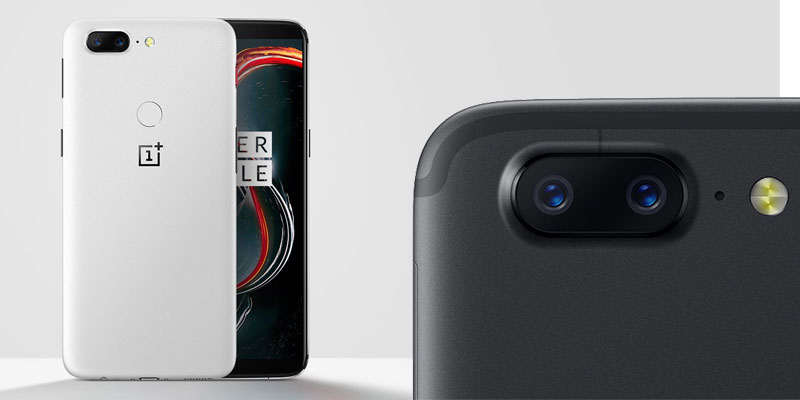
OnePlus has become synonymous with the term ‘Flagship Killer’ and for good reason. The OnePlus 5 offers the best available smartphone performance while only costing half the price of a flagship… but… the OP5 does look a little dated…
Bring on the OnePlus 5T which moves the fingerprint reader to the back while shrinking the top and bottom bezels and switching to an 18:9 aspect ratio. Why the sudden change? well… to look a little more… 2018… I suppose…
Fans who bought the OnePlus 5 are a little disappointed to see the new version being released so soon, but… it’s a step in the right direction towards full screen smartphones.
So what does the OnePlus 5T offer? An impressive (albeit not Samsung level) AMOLED Display, the fastest charging in the west and a top level performance all crammed into a light 162 gram aluminium body.
What you miss out on compared to the flagships is low light night photography and any type of waterproofing. But at this price… it’s a no-brainer!
Tech Specs: 6.01 inch, 2160 x 1920, 18:9 Aspect Ratio, Gorilla Glass 5, 403 PPI, Sony IMX386, Snapdragon 835, 6/8GB RAM, 64/128GB Storage, Super Dash Charge 3300mAh battery, Android 7.1.1 with Full UK Support, 7.3mm thick, 162 grams.
UMiDigi Crystal
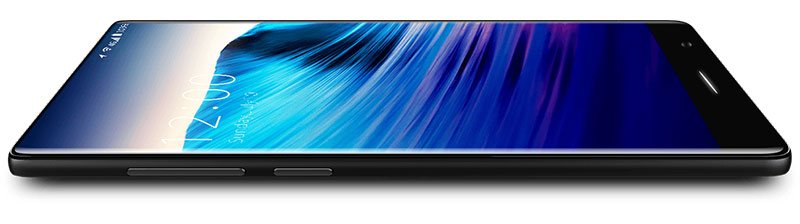
With an impressive 88% Screen-to-body ratio, the UMiDigi Crystal certainly has the wow factor! Available in two versions (2GB RAM + 16GB Storage | or | 4GB RAM + 64GB Storage), the Crystal offers a 5.5″ full-HD crisp Sharp display protected by Gorilla Glass 4 and a pure Android 7 experience.
Things start to get really impressive when you find out the price at which you can bag yourself the 4GB version for! Too good to be true right? To keep the price down, UMiDigi have opted for a lower-end CPUs, but the 4GB model still comes with the capable Mali-T860 graphics unit.
Overall, the Crystal offers fantastic value for money! The focus is on design, an excellent screen and mid-level performance for the 4GB version and budget performance for the 2GB model. It comes with USB-Type-C, SD Card Support / Dual-SIM Support and Dual Samsung Rear Cameras.
It’s worth mentioning that Dual-Cameras at this price-point tend to be disappointing and inferior to a single camera lens. So if you’re a serious shutterbug, ye here be warned! :D
Tech Specs: 5.5″ 1920 x 1080, 401 PPI, Sony IMX386, MTK6750T 8-Core CPU + Mali-T860 GPU, 4GB RAM, 64GB Storage, 3000mAh battery, Android 7 with Full UK Support.
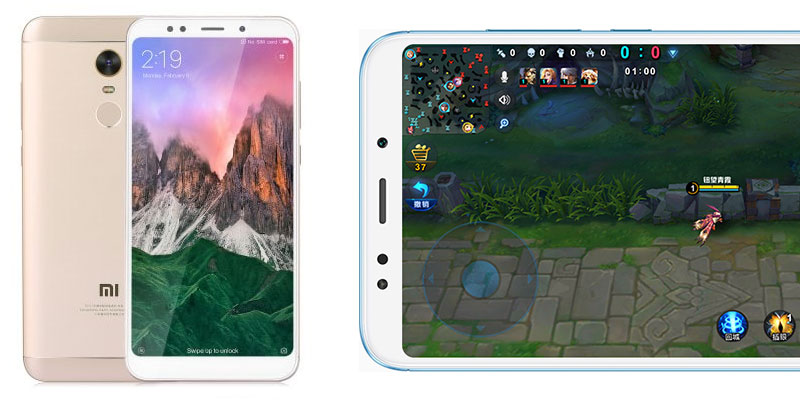
Xiaomi Redmi 5 Plus (International)
Xiaomi’s budget Redmi range now has its own high screen-to-body-ration smartphone to show off. It features a modern full HD+ 5.99 inch display panel that’s rocking an 18:9 aspect ratio and the on-trend curved corners.
It’s priced firmly in the mid-range making it an exciting alternative to the impressive but dated looking Xiaomi Mi A1. This is definitely going to be a popular smartphone going into 2018.
Out of the box, the Redmi 5 Plus is pre-installed with the latest MIUI9 customisable Android skin giving it a performance boost over older Xiaomi phones that haven’t yet had the update.
If the Redmi Plus is out of your budget, there is also a Redmi 5 (non-Plus) version that has lower resolution 5.7 inch display and more budget orientated specs. The Redmi 5 Plus is available now in Black, Gold, Rose Gold (Pink) & Light Blue.
Tech Specs: 5.99″ 2160 x 1920 18:9 Aspect Ratio, 403 PPI, 12MP Camera, Snapdragon 625, 4GB RAM, 64GB Storage, Fast charge 4000mAh battery, Android 7 + MIUI9.
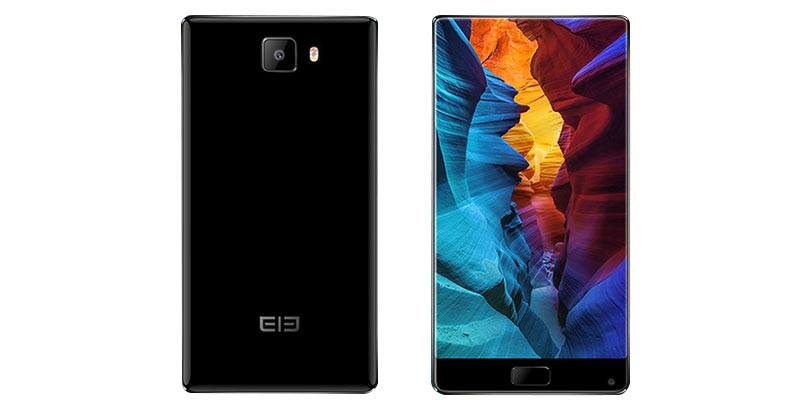
Elephone S8
The Elephone S8 is our third phone to feature almost bezel-less edges on three of the four sides. With Elephone being no stranger to bezel-less tech, having already released the S3 & S7, it’s great to see them innovating further with S8. Although the S3 & S7 didn’t make it into our Top Bezel-less Smartphones List this time around, you can still find them in our old list by scrolling down.
The Elephone S8 has a respectable 4GB’s of RAM and 128GB’s of storage as standard and is available now. Its crowning glory is the huge 6 inch 2K display that comes with an impressive Super-HD resolution of 2560×1440.
What’s really exciting is that when smaller manufacturers like Elephone are already reaching 3-border bezel-less 2K displays it forces the bigger manufacturers to play their trump cards early. No more slow feature rolling out for Samsung & Apple.
Simply put, the Elephone S8 has it all, a super-high screen-to-body ratio, Super HD Display, Flagship Performance and a Big Battery all for an affordable mid-level price tag.
Tech Specs: 6″ 2560×1440, MediaTek Helio X25 CPU, 4GB RAM, 128GB Storage, Quick-charge 4000mAh, 21MP Camera, Android 7.1 Nougat with Full UK network support.
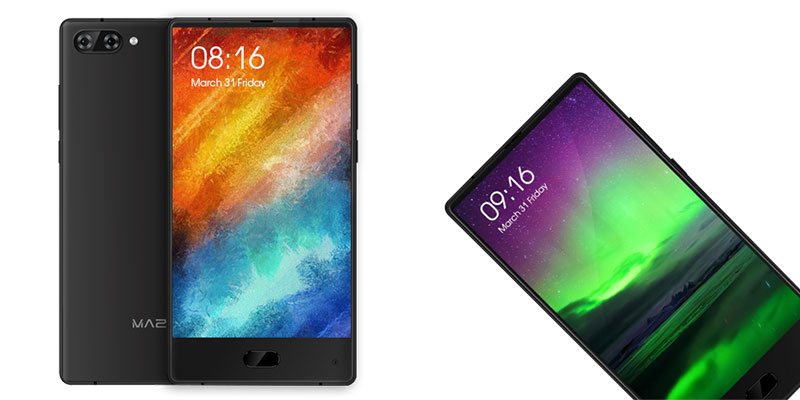
MAZE Alpha
Maze has followed the tri-bezel-less formula by focussing on a super high screen-to-phone ratio (86%) rather than super thin side bezels. It’s a beast at 6 inches and has a full 1920×1080 resolution that uses Gorilla Glass 4 protection.
Update: Check out the latest Maze flagship (Maze Alpha X) below.
It’s no straggler when it comes to performance either with the MediaTek Helio P25 combined with 4GB of RAM and 64GB of onboard storage. Powering the dual camera setup (13MP + 5MP, f/2.2) is a Samsung lens that will please the shutterbugs amongst us.
If you’ve never heard of Maze before that’s because they are new to smartphone arena with the Maze Alpha being their 2nd smartphone release after the Maze Blade. Before this, Maze partnered with other manufacturers using their expertise in R&D department and production line management.
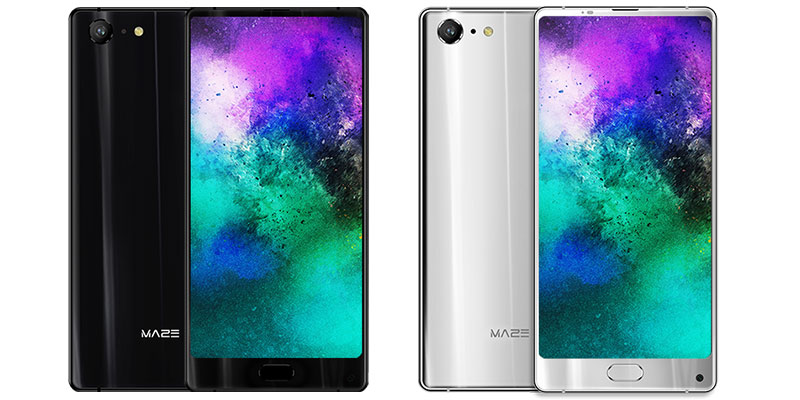
MAZE Alpha X
After aMAZE’ing us all with the Alpha, the Maze team are back with the Alpha X. Featuring a 6 inch LG display panel this time with an 18:9 aspect ratio it’s a mighty impressive phone that fits in your hand easily. Rather than go down the minimalist route of the original, the Alpha X comes in a super reflective glass sandwich design that oozes premium…
The newer display manages to give the Alpha X an incredible 89.6% screen-to-body-ratio while still keeping that front facing fingerprint reader. You will have to flip the Alpha X upside down for selfies, but you’re still treated to a headphone jack which is a bonus.
In terms of performance, the 6GB of RAM and power efficient mid-range MediaTek CPU will keep things running smoothly. While it doesn’t have flagship level performance, it is priced firmly in the mid-level bracket. There’s also a 128GB storage option, but you can save money on the 64GB as there’s a micro-SD slot available.
Tech Specs: 6 inch 1080×2160 Display, Gorilla Glass 5, 403 PPI, Dual rear Sony camera, Helio P25 CPU, 6GB RAM, 64/128GB Storage, Quick-charge 2900mAh, 209 grams, 5GHz + AC WiFi, Android 7 Nougat with Full UK network support.
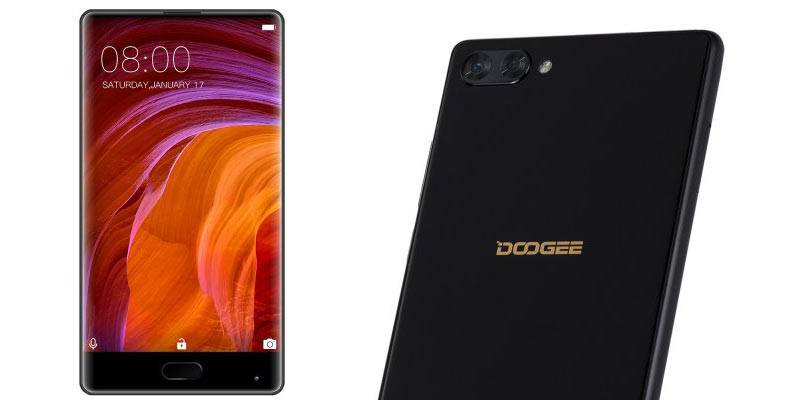
Doogee Mix 2
Fixing the biggest mistake from the Doogee Mix 1, the Mix 2 comes with a full-HD display using the popular 18:9 aspect ratio. Unfortunately, it drops the Super AMOLED Samsung display that we saw in the Doogee Mix 1, but we’re getting 6 inches of screen at Full HD.
It also moves away from the tri-bezelless design but still manages a respectable 78% screen-to-body ratio which is 1% more than the original Doogee Mix 1. In terms of hardware, it’s almost identical using the power efficient Helio P25 CPU coupled with 6GB of RAM but has a much bigger battery at 4060mAh to power the higher resolution display.
Design-wise, the Doogee Mix 2 uses a glass sandwich approach with a metal band connecting the two sides. Since there’s now some room at the top for the camera, Doogee has stuck two in there for those dual-lens bokeh effect selfies. It’s a big improvement over the bottom-placed camera on the Doogee Mix 1… but… the Mix 2 doesn’t quite have the wow factor of its little brother!
We’ll have a full review of the Doogee Mix 2 available soon.
Tech Specs: 6 inch 18:9 IPS 1080 x 2160, 403 PPI, Dual Rear + Dual Selfie cameras, Helio P25 CPU, 6GB RAM, 64GB Storage, Quick-charge 4060mAh, 209 grams, Android 7.1 Nougat with Full UK network support.
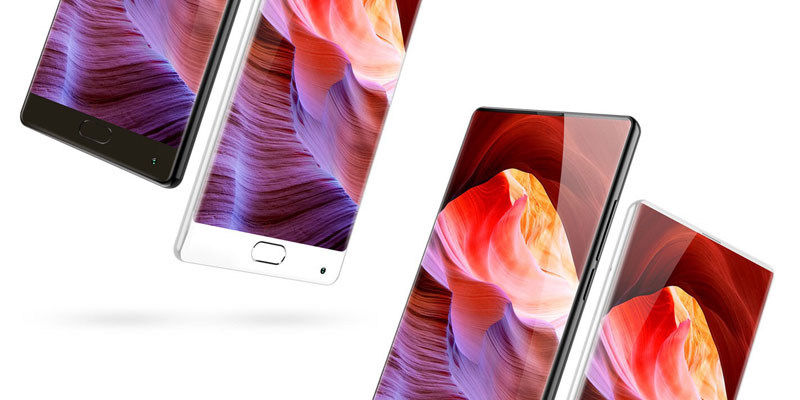
Bluboo S1
Joining the tri-bezel smartphone trend is the very affordable Bluboo S1. While the bezels aren’t edge-to-edge you’re still getting an impressive smartphone that’s packing a 5.5″ Sharp full-HD 1920×1080 resolution display.
With a 90% screen-to-body ratio, 6GB of RAM and 64GB of storage the Bluboo S1 isn’t holding anything back, offering great mid-level specs. Powering the phone is the mid-level MediaTek P25 CPU which won’t be a winning any benchmark awards but will still run the 1080P display and Android 7 OS smoothly.
The Bluboo S1 is another great example of mid-range smartphones offering flagship level innovation, albeit thanks to Sharp pushing out their fantastic tri-bezel-less display. The Bluboo S1 should be on your smartphone watch list.
Tech Specs: 5.5″ Sharp 1080×1920, 90% Screen-to-body-ratio, Gorilla Glass 4, MediaTek Helio P25 CPU, 4/6GB RAM, 64GB Storage, Android 7, 3500mAh Fast Charge battery, Android 7 with Full UK network support.
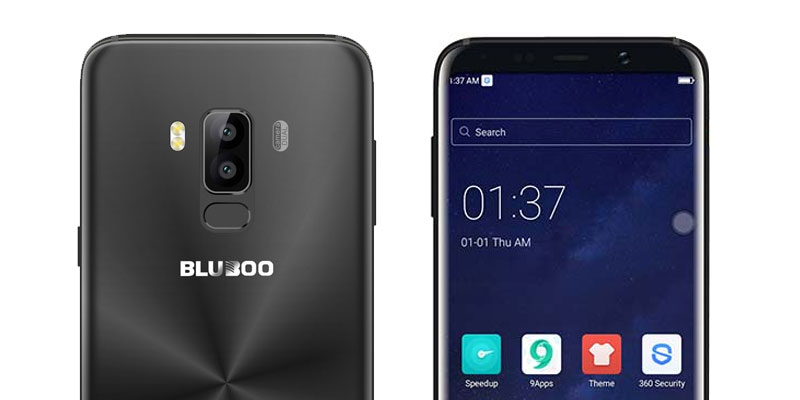
Bluboo S8+ (Plus)
As well as the tri-bezel S1 below, Bluboo are soon to release the Bluboo S8 Plus with an infinity display that has an impressive 83% screen-to-body ratio. Following in the footsteps of the Galaxy S8 and LG G6, the S8 will offer a 4-corner curved display that is 5.7 inches and will use an 18:9 aspect ratio.
The comparisons to the flagships ends there as the Bluboo S8 will only feature a 1440×720 pixel display and a low-end MediaTek CPU. It will feature a Sony dual-camera setup but in my experience, the low-end dual cameras are more gimmicky than practical.
None of this matters though, as the Bluboo S8 will retail at around the $150 making it a real steal. You can get a flagship style screen on a smartphone with average performance for a wallet friendly budget price.
Tech Specs: 6 inch Sharp infinity 1440 x 720, Gorilla Glass 4, Dual rear cameras (Sony), MT6750T CPU, 4GB RAM, 64GB Storage, Sony IMX258 16MP + 3MP Dual Cameras, Fast charge 3600mAh Android 7 Nougat with Full UK network support.
More awesome Bezel-less phones below!
The phones below didn’t make it into our new Top 5 bezel-less smartphones this time but there’s still great options to choose from. Another bonus is that if you pick up one of the phones below, you’re likely to grab yourself a borderless bargain.
Why? because they’ve all been available for some time now so prices will have dropped considerably.
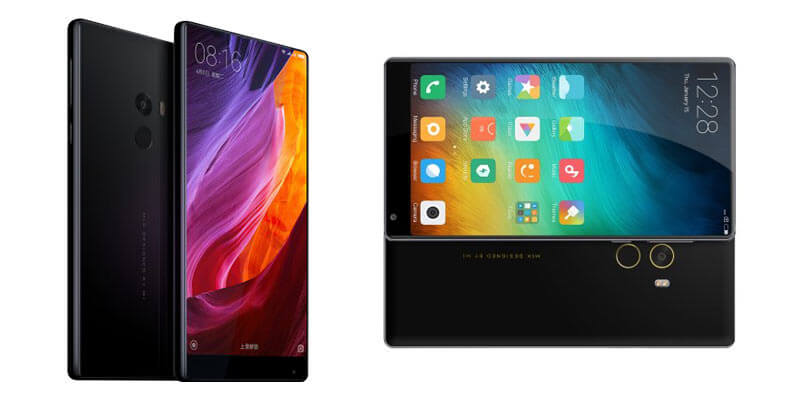
Xiaomi Mi Mix
If the Xiaomi Mi Mix with its almost non-existent bezels doesn’t get you excited then I don’t know what will. It’s a punch in the face to those who said mobile innovation is dead and will hopefully drive forward bezel-less innovation in 2017.
At 6.4″ the Mi Mix OLED Screen sounds enormous, but thanks to not having top or side bezels it isn’t much bigger than a Samsung S7 Edge. When we look at phone to screen ratio, the Mi Mix has a whopping 90% usable surface area which is unheard of before. Where you’ll notice a big difference between the S7 edge and Mi Mix is in its weight with the Mi Mix weighing a hefty 210 grams.
Xiaomi has chosen a 1080×2040 OLED screen with rounded corners for both the standard & pro model which looks crisp and has a decent PPI of 361. It would have been nice to see a QHD screen option for the Pro version as this would improve its VR capabilities. Inside, you’ll find a top of the line Snapdragon 821 CPU & either 4GB or 6GB of RAM.
The Mi Mix, in my opinion, is one of the best-looking phones of 2016 and has some good, not perfect, specs to match. If bezel-less isn’t your thing then the OnePlus 3T has very similar specifications at a lower price point.
Doogee Mix
Doogee are entering the borderless phone arena with the stunning Doogee Mix. The name does sound a little too similar to the Xiaomi Mi Mix for my liking, but I’ll leave that to the IP lawyers. Also similar to the Mi Mix is the 3 sided bezel-less technology that’s gone into the Doogee mobile, although there is more of a top border housing the ear speaker.
In terms of specs, the Doogee Mix has everything ticking almost all the boxes… but leaves us feeling a little underwhelmed that the display is only 720P. On the plus side, the display is AMOLED meaning it will feature great black levels. With the screen being 720P, AMOLED technology and the battery already packing a decent 3380mAh I’m expecting some serious battery life from the Doogee Mix.
Performance wise, the Mix is using a MediaTek Helio P25 8-core performance CPU and comes with either 4 or 6GBs of RAM to power the set of dual-rear cameras enabling you to snap some serious bokeh.
The Doogee Mix is available now and unlike some of the other bezel-less options in this list, it’s priced firmly in the lower mid-range. Its bezels might not be the slimmest but it still has an awesome display-to-phone ratio.
Tech Specs: 5.5″ AMOLED 1280 x 720, Dual rear camera, Helio P25 CPU, 4/6GB RAM, 64GB Storage, Quick-charge 3380mAh, 193 grams, Android 7.0 Nougat with Full UK network support.
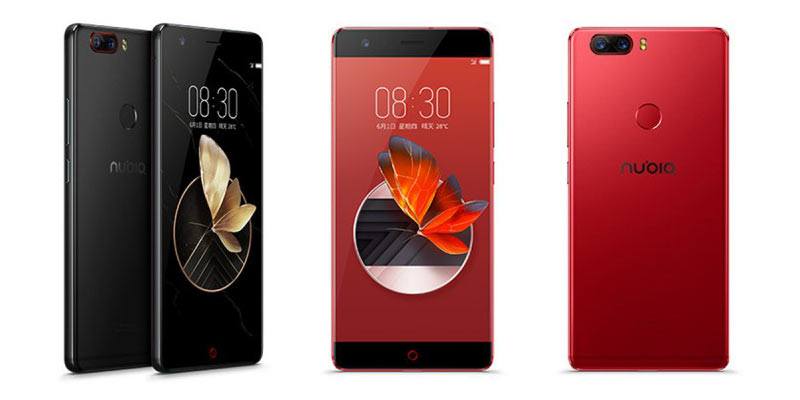
Nubia Z17
Nubia are no strangers to bezel-less phones. Even as early as 2015, they were rocking the bezel-free Nubia Z9. As the bezel-less pro’s that they are, Nubia focussed in on creating a true flagship specc’d phone with the Z17.
Featuring a top of the line Snapdragon 835 chip, 6GBs of RAM, Dual rear cameras (23MP + 12MP) and 128GB storage, the Z17 is competing against the Galaxy S8, OnePlus 5 and iPhone 8. Missing from the list is Quad HD resolution and an OLED screen but, even so, it’s still going to be an excellent flagship smartphone.
It’s also rumoured to come with an IP waterproof rating, but we’ll have to confirm closer to release.
Tech Specs: 5.5″ IPS 1920×1080, Dual rear cameras, Snapdragon 835, 6GB RAM, 128GB Storage, Qualcomm quick-charge 4+, 3200mAh, 173 grams, Android 7.1 Nougat with Full UK network support.
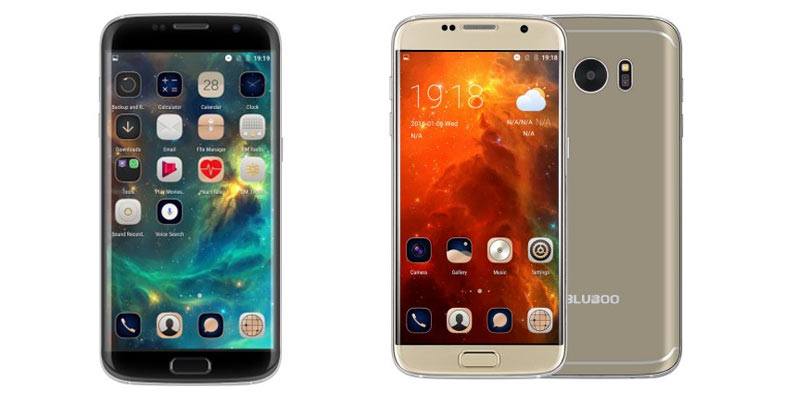
Bluboo Edge – Super-budget friendly
If you’re looking for a wallet friendly bezel-less phone then the Bluboo Edge should land firmly on your radar. Whilst it’s not as elegant as some of the phones listed above, it does come with a very big positive; the low price-tag.
The Bluboo Edge is aimed at light Android users who don’t need buckets of processing power but do want a great screen to view all their media on. The 16GBs of storage is upgradable via a micro-SD card and it also features dual-SIM functionality as well a fingerprint scanner built into the home button.
Tech Specs: 5.5″1280 x 720, Gorilla Glass, MediaTek 6737 CPU, 2GB RAM, 16GB Storage, 2600mAh, 206 grams, Android 6 Marshmallow with Full UK network support.
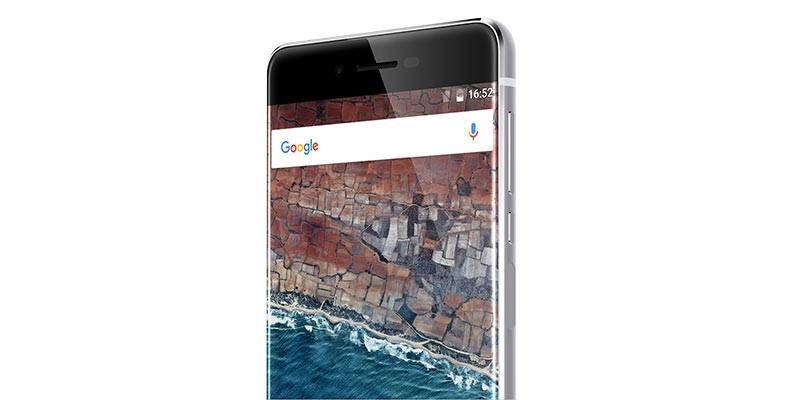
Ulefone Future
No one can deny that the Ulefone Future has borrowed it looks from the all mighty iPhone but it’s taken a step further by offering us a bezel-less screen which makes this phone look nothing short of cutting edge-
View our first impressions of the Ulefone Future.
Tech Specs: 5.5″ 1920×1080, Gorilla Glass 3, Helio P10 CPU, 4GB RAM, 32GB Storage, Quick-charge 3000mAh, USB Type-C, 185 grams, Android 6 with Full UK network support.
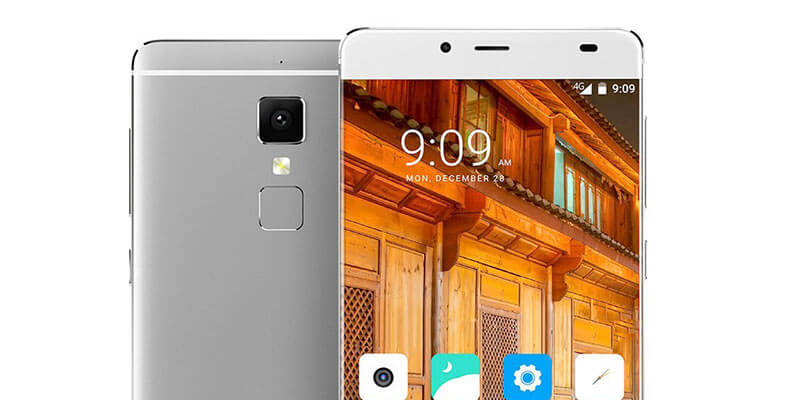
Elephone S3
Elephone have stormed onto the market in the last year and now have 2 bezel-free smartphone offerings. The latest, the Elephone S3 features full UK 4G support and packs a truly edge-less full HD screen that curves around the edges of the phone.
Although it’s not packing the latest MediaTek CPU, for day to day use, the Octo-core CPU handles most tasks easily giving you fluid overall experience. What’s great is that this phone is geared up toward to budget friendly mobile user who doesn’t want to compromise on style.
Tech Specs: 5.2″ IPS 1920×1080, MediaTek MTK6753 Octa-Core CPU, 3GB RAM, 16GB Storage, Quick-charge 2100mAh, 167 grams, Android 6 with Full UK network support.
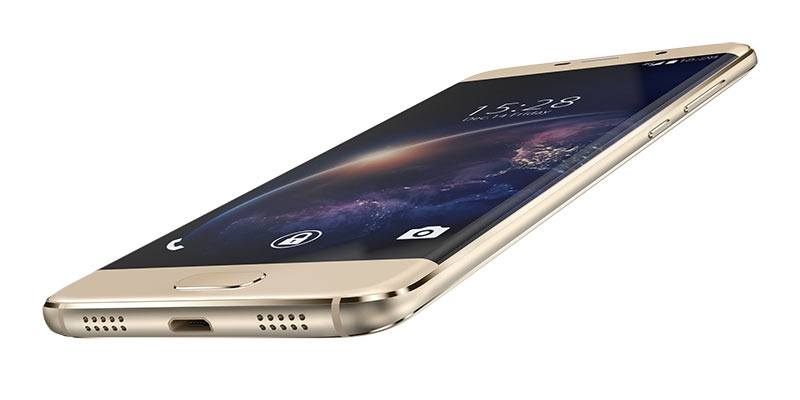
Elephone S7
The S7 (soon to be released) is the upcoming flagship model from Elephone which also features a bezel-free display similar to the S3. The specifications available so far are quite limited but we do know that Elephone have said it will feature the top of the range MediaTek Helio X20 CPU that can compete against current flagship phones.
On a personal note I’m very happy to see that the Elephone S7 will be released with a front-facing fingerprint sensor. For someone who’s phone spends most of the day flat on a desk, rear fingerprint sensors aren’t very practical.
According to our source, Elephone will be releasing two versions of the S7: a light & a Pro version. The light version is expected to drop some of the high-end specs and come in at a lower the price. I’ll update this with more details on the Elephone S7 soon.
Tech Specs: 5.5″ 1920×1080, Helio X20 CPU, 3GB RAM, 32GB Storage, Most likely Android 6 with Full UK network support.
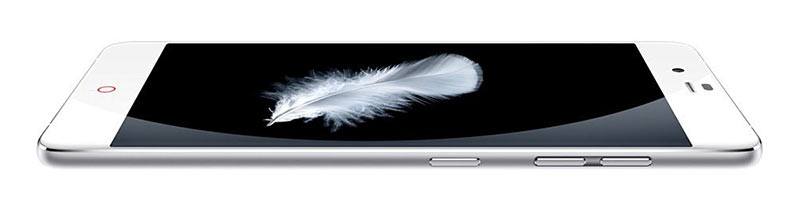
ZTE Nubia – My Prague Elite
It’s great to see Nubia back again with another bezel-free offering after they massively impressed us with the edge-less Nubia Z9 (below). Nubia’s latest offering, the ‘My Prague’ smartphone has a full HD AMOLED screen measuring in with a whopping 424 PPI. The screen doesn’t quite curve all the way around the phone but it’s pretty close and makes the My Prague stunning to look at.
If you’re looking for an Android iPhone alternative then the My Prague is definitely worth checking out. The elite version comes with 32GB storage but both versions have an SD card slot allowing up to an extra 128GB memory card.
Tech Specs: AMOLED 5.2″ 1920×1080, 424 PPI, Snapdragon 615 CPU, 3GB RAM, 32GB Storage, Battery 2200mAh, Dual SIM, 140 grams, Android 5 partial UK network support (missing 800MHz – Band 20).
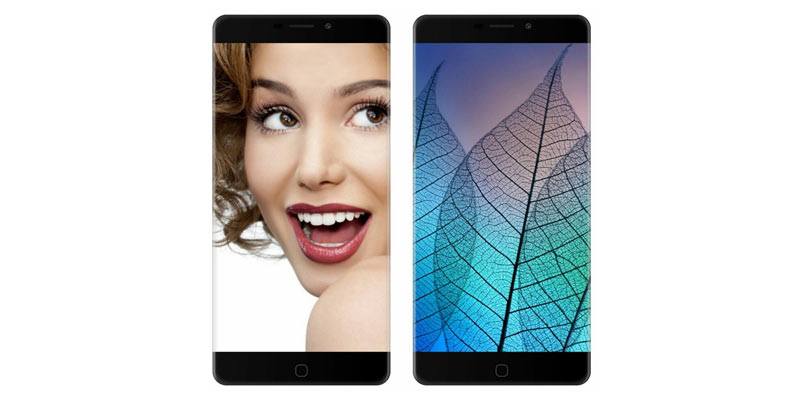
Elephone P9000 Edge (Bezel-less)
Not to be confused with the P9000 or P9000 lite which are both available with narrow bezels, the P9000 edge uses curved glass and displays no visible borders when viewed face on. Elephone have been keeping details of the P9000 Edge under wraps so far with only a few pictures and videos leaked of the device.
I have a hunch that Elephone are either; capitalising on sales of the P9000, with its thin bezels, before releasing the bezel-less ‘edge’ version or that their development team still have software issues to overcome before being able to release the P9000 Edge.
A third option that we have to consider is that the P9000 edge is just a marketing ploy by Elephone to increase brand awareness although, sources say, that the completely bezel-less P9000 does exist.
It’s likely to have similar hardware to the P9000, so I’ve listed the current specifications below although these may change before launch.
P9000 Tech Specs: 5.5″ 1920×1080, MediaTek Helio P10 CPU, 4GB RAM, 32GB Storage, Quick-charging & wireless charging 3000mAh battery, Sony IMX258 21MP + 8MP selfie, USB-Type C, Side placed fingerprint reader, 145 grams, Android 6 with full UK network support.
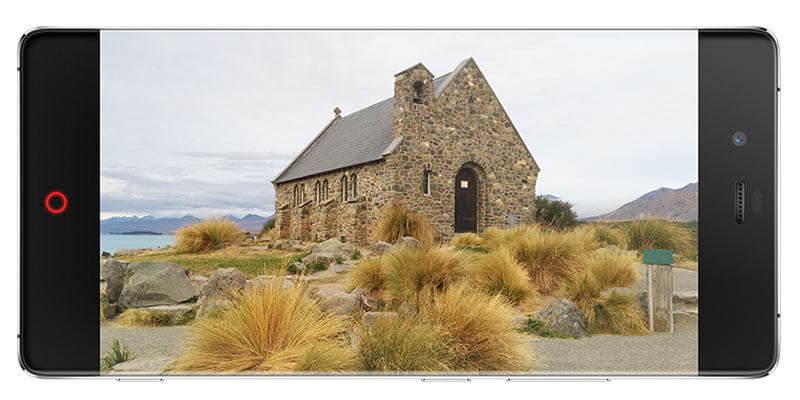
ZTE Nubia Z9
The Nubia Z9’s curved glass edges and almost borderless display combine to make one sexy looking smartphone. The beautifully vivid IPS display and glass sandwich design gives the Z9 a premium look and feels suited to a flagship smartphone.
Add to this some impressive photography capabilities and that glowing halo home button and the Nubia Z9 becomes even more impressive.
Although the Z9 was released in 2015, it’s still a great bezel-less option for 2016 if you can manage to get your hands on one. I’ve not had much luck finding online retailers that still have stock available. Currently, Nubia are focussing more on the Z9 Max 5.5″ version and the Z9 mini, but neither have the finesse or bezel-less edges of their older trend-setting brother the Nubia Z9.
Hopefully, Nubia will make a return to the bezel-less arena soon with another flagship model.
Tech Specs: 5.2″ 1920×1080, Snapdragon 810 CPU, 3/4GB RAM, 32/64GB Storage, 2900mAh, Sony IMX234, 4K video, 192 grams, Android 5 with partial UK 4G network support (full 3G support).

Oppo Bezel-free phone
A while back now, there was a video leaked of a new Oppo smartphone that appears to have a bezel-less design. The phone in question uses a wrap around front glass effect so we can’t be entirely certain whether this is a trick of the eye.
You can see the Oppo Bezel-less video here. We haven’t had confirmation from Oppo whether they will release any phones with this technology this year but with the competition hotting up I think it’s likely we will towards the end of the year.
We haven’t had confirmation from Oppo whether they are going to release any bezel-less phones this year but with the competition hotting up I think it’s likely we will see the mysterious Oppo phone resurface towards the end of the year.
The Oppo Find 7 Plus at first glance gives the illusion of an entirely bezel-less phone but this illusion ends as soon as the screen is active where you can clearly see black borders.
I’ll update this with more information when we find out more on whether Oppo plans to release a genuinely bezel-less smartphone.
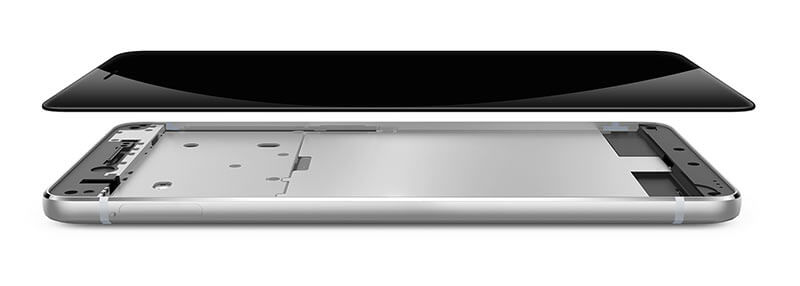
The technology behind Bezel-free phones
You might be wondering why it’s taken manufacturers so long to catch up with Samsung and produce budget variants of the bezel-less screen? Let’s break it down into two reasons.
Reason number 1 is the cost & research needed to produce bezel-less technology.
A company such as Samsung has the money, resources & research to be able to create new types of technology such as an entirely border-less wrap-around screen. Smaller mobile manufacturers tend to outsource their parts which means they have to wait for 3rd party suppliers to innovate before catching up with the market leaders.
Reason number 2 is that manufacturers have had to create their own bezel-less software.
If you remove a smartphone screen bezel entirely, you then create another set of problems to overcome. When holding a phone, your hands will be gripping the edges of the screen slightly. On a phone with bezels, this is not a problem as you have an area on no-touch at the sides of the mobile screen. On a bezel-less phone, the screen will be registering these extra touches. To combat this, mobile manufacturers need to develop software that will recognise the difference between your hand gripping the phone and your hand trying to use the phone.
Thanks for reading & hit me up with any questions you have in the comments below : )
Thursday, 11 January 2018
London was top destination for tech funding in 2017: Report
Tech firms in London attracted 2.45 billion pounds ($3.3 billion) in venture capital funding in 2017, about 80% of the 2.99 billion pounds invested in Britain as a whole, according to data compiled by funding database PitchBook for London & Partners.
Eileen Burbidge, partner at Passion Capital, said it was no surprise to see London - and Britain - leading the pack because it has both the talent and investor capital needed.
"It"s a testament to our exceptional entrepreneurs that the UK tech sector continues to produce companies that are leading in the development of cutting edge technologies such as artificial intelligence and fintech," she said.
Fintech, or financial technology, was the most popular segment for investors, attracting a record 1.34 billion pounds in venture capital, the data showed, led by major rounds for TransferWise, Funding Circle and Monzo.
Artificial intelligence (AI) was another growth area, with UK-based AI firms raising 488 million pounds, double the amount a year earlier, the data showed.
Other big deals last year included a 391 million pound investment into Improbable, whose software creates large-scale simulations in the cloud; 364 million pounds for food delivery company Deliveroo; and 255 million pounds for mobile phone firm Truphone.
Burbidge said the biggest threat to Britain"s leadership was any restrictions in its ability to attract the best talent after the country leaves the European Union next year.
"Access to talent is critically important," she said.
"Being able to attract EU talent has been a huge advantage for the UK in the last few years. For the UK to look like a welcoming place is really important."
Index Ventures partner Jan Hammer also said any post-Brexit restrictions on EU citizens movement would be detrimental.
"Protecting the talent inflow is the key source of growth of start ups," he said.
At the moment, however, London was setting the standard both in breadth and quality of start-ups, he said, noting that the city was home to role models such as Just Eat, King, a gaming company acquired by Activision Blizzard for $5.9 billion in 2015, and TransferWise.
"In our portfolio roughly 50 companies of the 150 companies we have are headquartered in London, and there are about another 25 foreign companies that have set up in London," he said.
Wednesday, 10 January 2018
2018"s top 5 biggest upcoming games
On this week’s GamesBeat Decides podcast, we determined the games you need to look forward to for the rest of the year. We have spoken, and so it is written!
Enjoy this list of the only games you are legally permitted to anticipate until 2019. You can listen to the audio version of the podcast right here:
5. Sea of Thieves
Platform: PC, Xbox One
Release date: March 20
One of Microsoft’s biggest upcoming games is Sea of Thieves from developer Rare. It is a persistent pirate simulator that has players working online with other people to take on quests and fighting for control of the treacherous water. We’ve tried it a couple times now and it’s starting to come together in a really exciting way.
4. The Last of Us: Part II
Platform: PlayStation 4
Release date: Possibly late 2018
Naughty Dog is one of the best developers producing single-player cinematic experiences, and it is following up its big PlayStation 3 hit The Last of Us with a sequel on PlayStation 4. We don’t know much about it yet, but it looks violent and harrowing.
3. Red Dead Redemption 2
Platform: Xbox One, PlayStation 4
Release date: Spring
Rockstar hasn’t released a new game since 2013’s Grand Theft Auto V. It has spent the intervening years releasing new content for its GTA Online game and making Red Dead Redemption II. This tells the story of the outlaw Arthur Morgan and the Van der Linde gang and their adventures in the Wild West.
2. Kingdom Hearts 3
Platform: Xbox One, PlayStation 4
Release date: … 2018. Or so they say.
Kingdom Hearts is allegedly a good game series (hi, Jeff here!). I finally played the original about a year and a half ago, and I hated it. It was bizarre, boring, and pointless. But Mike claims that these are actually not bad and he is very excited about Kingdom Hearts 3, and everyone is deeply flawed. Also, are we sure this is coming out in 2018?
1. God of War
Platform: PlayStation 4
Release date: 2018
The last time Sony gave fans an opportunity to anticipate a God of War, it was God of War: Ascension for PlayStation 3. That’s something no one cared about. Now, the series is getting a “requel” — one of those reboot sequels that is popular with movies right now — and it looks fantastic. Kratos has retired and is raising a kid, and you get to spend the whole time guiding the child through a world of monstrous Nordic gods.
It looks like a hell of an experience that expertly straddles the massive scale of God of War fights with an intimate story about a man and his beard … and his child.
 The PC Gaming channel is presented by Intel®"s Game Dev program.
Tuesday, 26 December 2017
Top 3 Firewalls for Windows – Review
A firewall is the first line of defense against malware and phishing attacks that can immensely damage your PC. Windows has a built-in firewall that does a reliable job of protecting your system against most of the online threats. However, it still lacks some of the advanced protection features and customization options.
If Windows built-in firewall isn’t enough for you, then you can try some third-party firewalls that offer more control and protection. Below Is have reviewed 3 of the best Windows firewalls for you to choose the best firewall for your PC.
Is a firewall necessary?
Firstly, it is necessary to understand the importance of a firewall. When you connect to the internet, the data is accessible on both sides. Like if you can access the internet, the internet can also access your PC. If not protected, a hacker could easily send malicious code to your PC or take advantage of a security hole to steal data and damage the system.
A firewall basically works as a filtering system to scan the data and ensure no infected data goes by. I should also mention that it’s easier to protect yourself against downloading infected files. However, you can’t do much about an unsafe internet connection. Therefore, a firewall is necessary even if you think you can follow proper safety guidelines.
Note: Before using any of these third-party firewalls, make sure you turn off Windows built-in firewall. Similar to antivirus programs, firewalls will also conflict with each other if used simultaneously.
1. ZoneAlarm Free Firewall
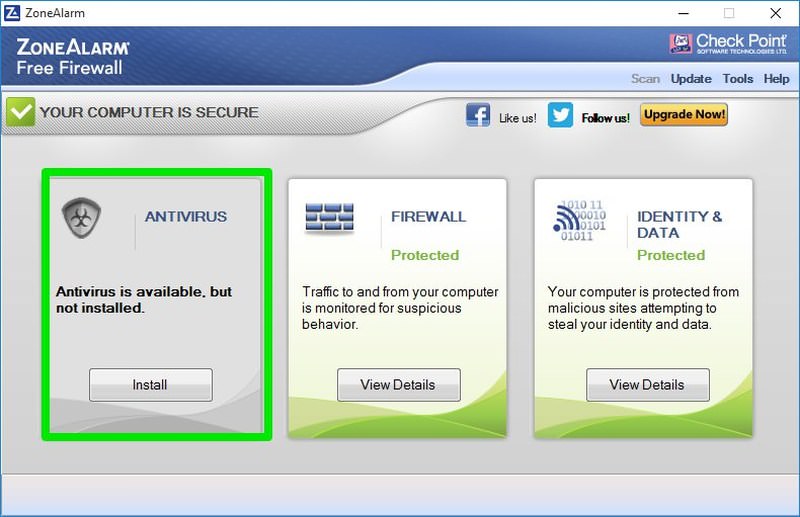
ZoneAlarm is one of the most popular firewall programs that offers reliable protection with a highly customizable interface. It scans both inbound and outbound connections and ensures there is malicious activity.
Additionally, it keeps a strict eye on applications and processes to ensure no application goes rogue and is always stopped in its tracks.
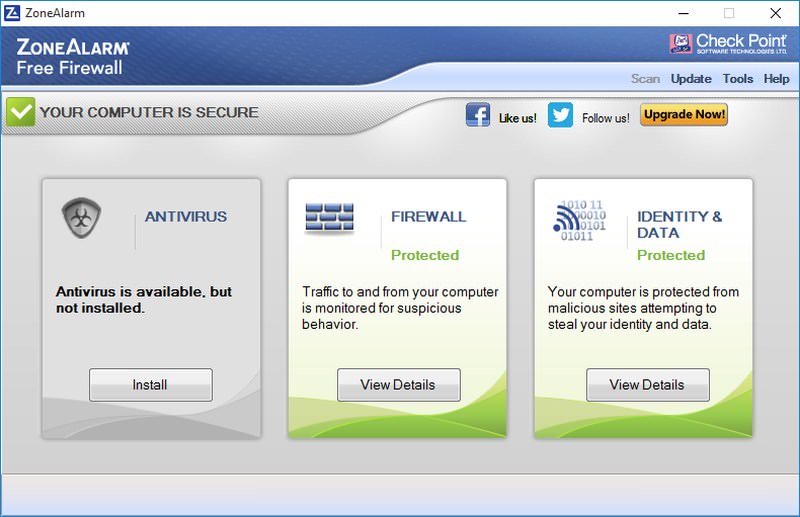
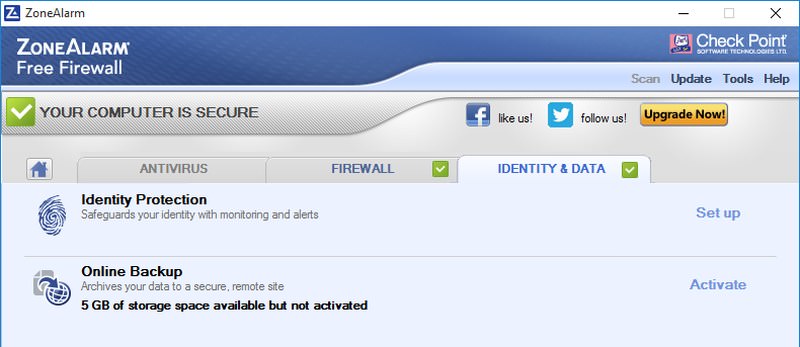
I also really liked it’s added Identity and data protection feature that alerts you whenever an untrusted website asks for your personal information or any other personal data. There’s also a handy game mode that suppresses alerts while you are gaming.
Interface and usability
ZoneAlarm Firewall interface is very intuitive and it took me less than a minute to take full control over its features and customization options. All of the functions are perfectly customized for average use by default and big buttons in front make it easy to explore the program.
I did see an ad to check out ZoneAlarm paid antivirus solution, but it didn’t bother me once I clicked the Close button. Additionally, the Identity and Data protection feature needs to be turned on and configured manually, which can be a both good and a bad thing.
As for customization, it makes it very easy to select the level of protection you require, you can either go medium protection with fewer alerts or high protection that can even block all types of inbound connections.
On top of that, you can also view all the logs and secured applications, and individually customize each application and connection setting.
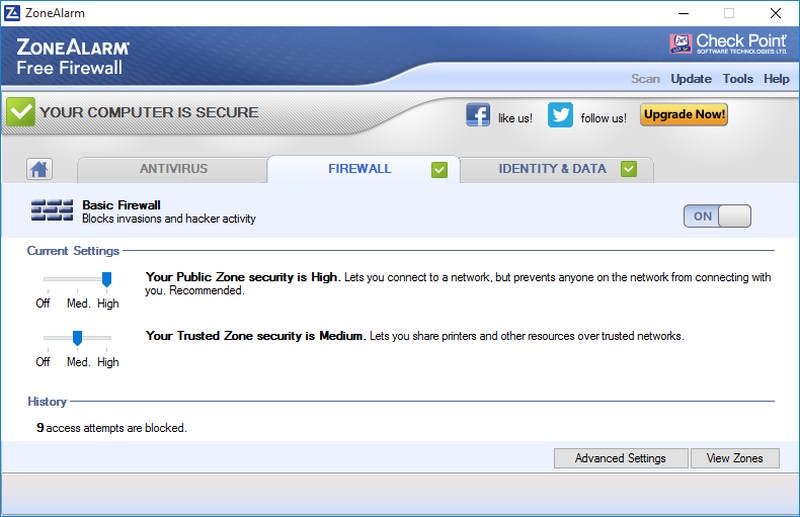
Its worth noting that ZoneAlarm Antivirus is directly baked into ZoneAlarm Firewall and you will find many grayed out options that are actually added for the antivirus and can only be used if you download the antivirus program as well. Even if you want to use the firewall only, you will still have to deal with the antivirus settings.
Features
Some of the notable features of ZoneAlarm Free Firewall are below:
- Both inbound and outbound connection scanning.
- Application behavior control.
- Identity and data protection.
- Gaming mode.
- Stealth mode to become invisible.
- Wi-Fi protection to protect against unsecured networks.
- Real-time updates to protect against latest breakthroughs in malware world.
- Automatic Firewall configuration based on new connection type.
Pros
- Easy to use interface.
- Highly customizable.
- Offers both connection and application behavior monitoring.
- Automatic learning from user behavior.
Cons
- You may see recommendations for ZoneAlarm’s other products.
- ZoneAlarm antivirus program is baked into the ZoneAlarm Firewall (which doesn’t work by default).
2. Privatefirewall
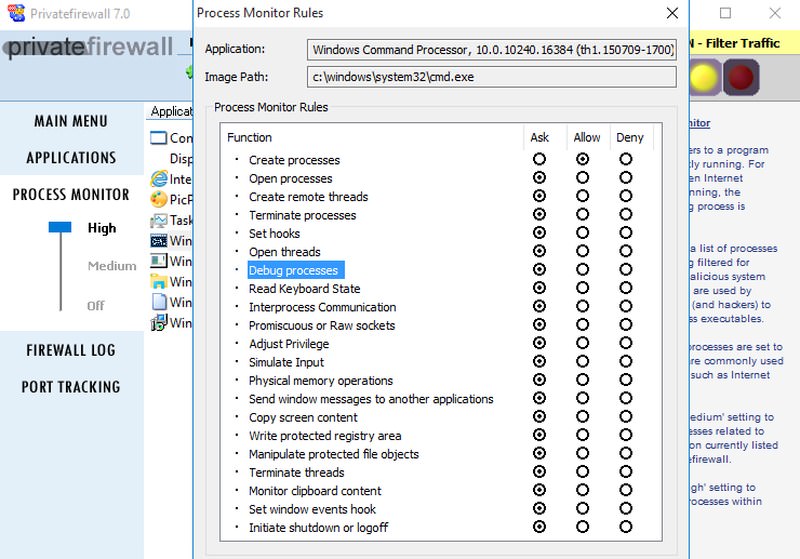
Privatefirewall doesn’t have one of the most beautiful interfaces and may seem a bit confusing at first. However, it is a powerful firewall program that has some unique features and offers reliable protection.
It can monitor both inbound and outbound connections and has support for application and process monitoring to ensure no program goes rogue.
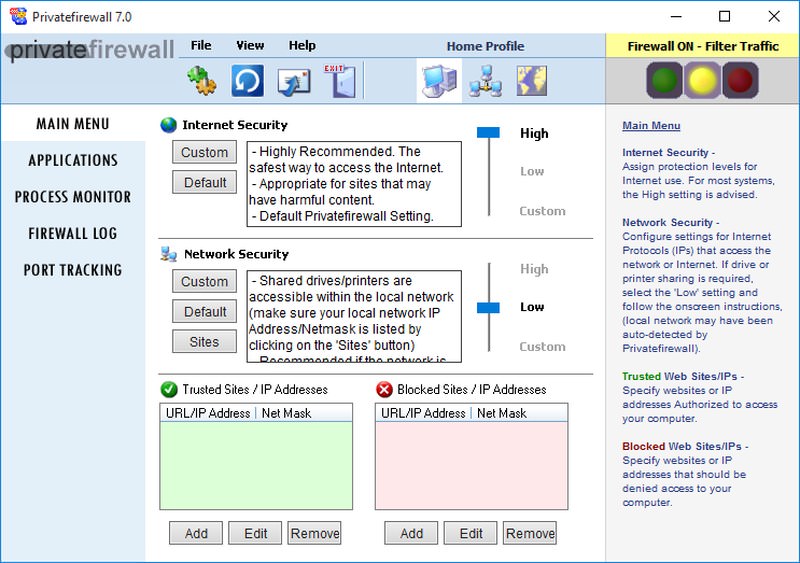
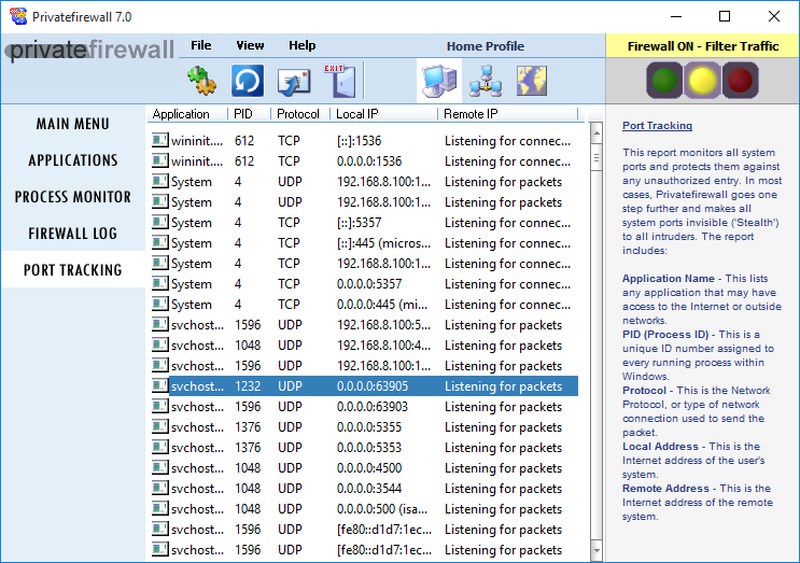
I really liked its Port tracking section where you can see all the networks ports and even terminate any port you like. Similar to ZoneAlarm, it stealths the ports to make them undetectable from outside. It also has a cool email anomaly feature that protects against mass spam emails being generated from your PC.
Interface and usability
As I said earlier, Privatefirewall interface isn’t that attractive, but this should not make you flee. If you explore a bit, you will easily get a hang of it. Besides, it also offers detail explanation of what you can do in each window on the right-side of the window.
So it is arguably easier to get a hang of if you don’t mind reading the instructions. Additionally, it has dedicated profiles for home, office and shared networks to apply the right settings automatically.
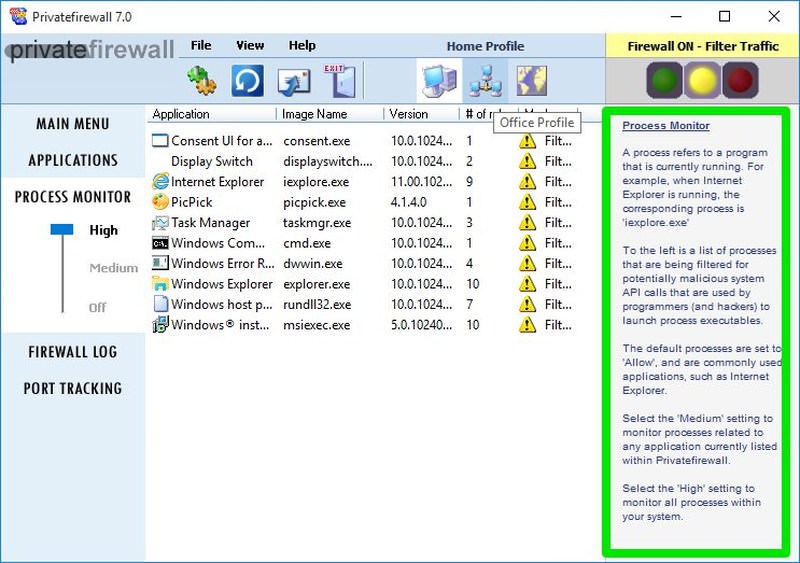
The applications and processes are listed separately and you can double-click on each program to open configuration options. There are also handy quick access buttons to allow, deny or filter all the traffic with a single click.
To top it off, Privatefirewall also has an automatic training system for both network and application anomaly to handle them automatically as time passes.
Features
Below are some notable Privatefirewall features:
- Inbound and outbound connection monitoring.
- Built-in port tracker.
- Email anomaly detector.
- Process and application anomaly detector.
- Anti-logger.
- Stealth mode.
- Customizable automatic learning system.
- Dedicated profiles based on usage.
Pros
- Provides detailed instruction for each feature.
- Highly customizable with dozens of separate customization options for each program/process.
- Track and manage ports.
Cons
- Dull interface.
- No options to configure different types of traffic and connections.
3. TinyWall
TinyWall has a setup file of hardly 1MB and doesn’t even have its own interface. It sits in the system tray and works from there. This economical behavior forced me to compare its resource usage with the above two firewall programs, and I found out that it used one-third of the PC resources as compared to the above programs.
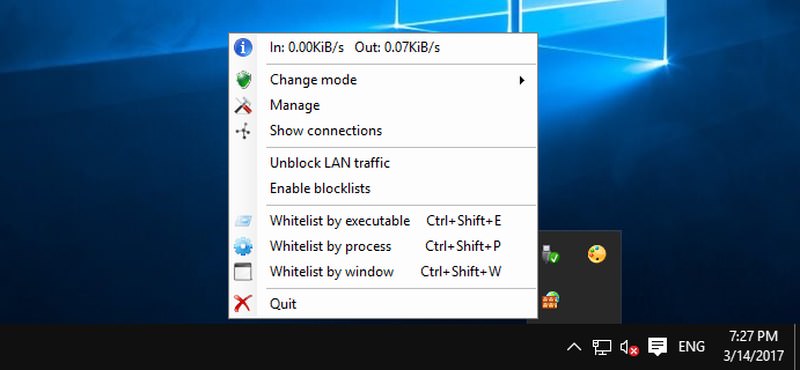
TinyWall is created to work alongside Windows built-in Firewall and it enhances its features and offers better control. Although TinyWall focuses mostly on managing inbound and outbound connections, but it also scans application to check if they are safe or not (no dedicated options available, though).
Interface and usability
As TinyWall works from the system tray and doesn’t have an interface of its own, it may leave many people feeling less satisfied. However, its few options in the system tray menu are more than enough to take full control over the program features. You can easily change it’s working modes and control whitelists and blocklists.
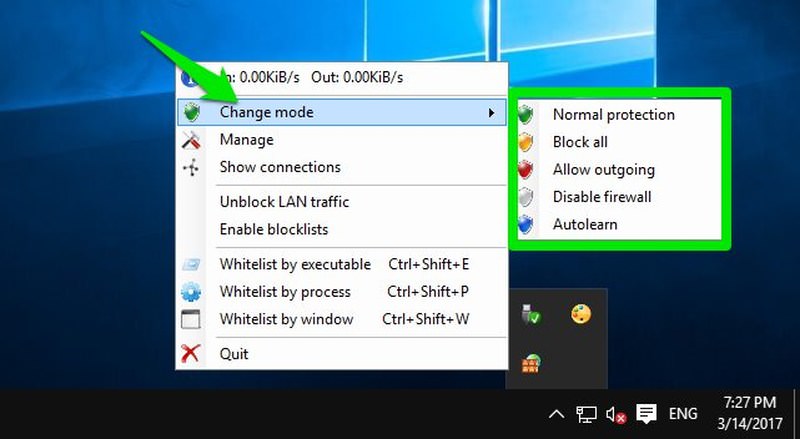
The awesome thing about TinyWall is its “no pop up” rule. TinyWall never shows any pop up for applications blocked or allowed. If it accidentally blocks an important application’s network access, then you will only find out when you see it can’t access the internet.
Of course, this can be annoying in rare situations when something important is blocked, but it also eliminates the biggest headache that comes with firewall programs; pop-ups.
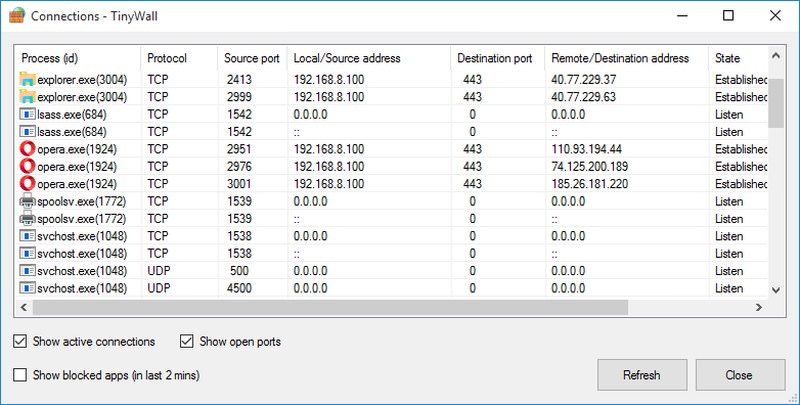
Additionally, it also makes it easy to whitelist programs and process. With a simple keyboard shortcut, you can whitelist any application or process. Its Show connections option also attracted me where you can see and manage all the established connections and open ports.
Features
- There are no pop-ups.
- Has built-in setting modifying protection from malicious programs.
- Easily whitelist programs.
- Automatic learning mode.
- Password protect settings.
- Dedicated LAN control options.
- Protects host file.
Pros
- Works alongside Windows Firewall.
- Doesn’t annoys with pop-ups.
- Very easy to use and makes it easy to block and whitelist programs manually.
Cons
- It’s no pop-up rule can also block important programs without your knowledge.
- Less customizable as compared to the above two programs.
- Application behavior monitoring feature is very limited.